Epidolex®; the route towards it’s FDA approval

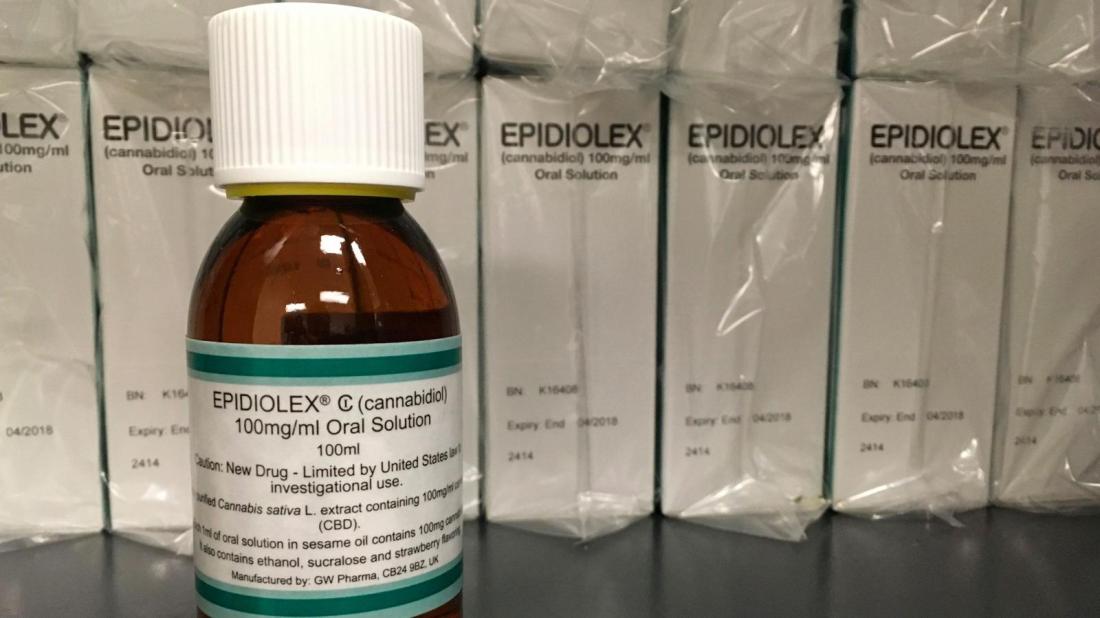
Epidolex
Oral solution of Epidolex. Image obtained from https://qz.com/1447741/epidolex-is-the-first-cannabis-derived-drug-approved-by-the-fda/

So firstly, for those of you who haven’t already heard, Epidiolex® it is an oral solution which consists of purified (99.9%) CBD derived from the cannabis plant. The drug is manufactured and distributed by a UK-based business known as GW Pharmaceuticals as medicine for two rare forms of childhood epilepsy. Epidiolex® and cannabis in general, received significant attention within the field of medicine after the oral solution became recognised as a true ‘medicine’ by the Food and Drug Administration (FDA) agency on June 25, 2018.

This status of approval positively impacted the way many of us now perceive cannabis. Media vendors significantly influenced this impact by headlining that Epidiolex® has become the “worlds first cannabinoid drug” and that it has opened many doors for investment and research. Some of these media articles, however, did what the media does well… present their bias thoughts on this event. Thus, causing a large proportion of public and government perceptions to remain within the historic belief that cannabis is ‘no good’. This is rather distressing, as extensive research has previously occurred presenting evidence that cannabis products are positively associated with health. I can understand the misconception, as there are also negatives associated with some of the active compounds found in cannabis, but these ‘side effects’ are associated with a grand proportion of medicinal compounds used worldwide. This doesn’t stop a majority of us from taking the drug… really it’s all about weighing out the pros and cons.

In order to help the scientific community in altering the general publics idea on cannabinoid derived medication, I think it is important to explain (in general) the process through which Epidiolex® had to undergo in order to obtain FDA approval.

The approval process

Before GW pharmaceuticals were able to submit an application to the FDA, they had to undertake many years worth of research, process development and validation along with upscaling the process for drug manufacture. Surprisingly, this is something the business focussed on since their establishment in the late 20th century… meaning it took them under two decades to understand the complex process for creating the drug.

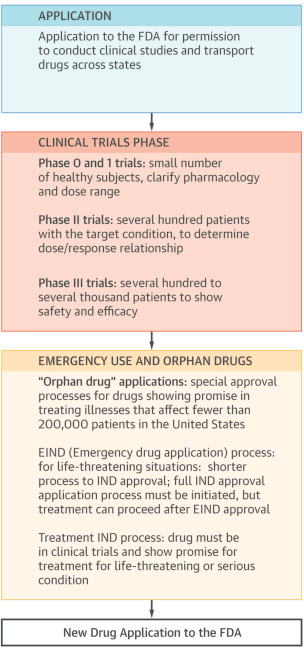
Finally, when GW was confident that their developed drug had the potential to improve the lives of individuals, they filed an application to the FDA, which granted them permission to conduct clinical trials. These randomized, placebo-controlled clinical trails consist of three-phases (Phase 1: Devinsky et al., 2017; Phase 2: Devinsky et al., 2018; Phase 3: Thiele et al., 2018) that assess different aspects of the drug. They were also double-blinded meaning that neither the patient nor the doctor knew whether the drug administered was active or placebo.
fda approval
American process to submit a new drug application to the FDA

Phase 1
This trial randomly treated 120 children/young adults with the Dravet syndrome and drug-resistant seizures over a 14-week treatment period. The study found that the median frequency of convulsive seizures per month decreased (12.4% to 5.9%) more in patients administered with Epidiolex®, compared to those administered with placebo (14.9% to 14.1%). This study basically clarified that the drugs work.

Phase 2
The second phase of clinical study enrolled patients with Lennox-Gastaut syndrome (age range, 2 to 55 years) and randomly separated them into groups to study the dose to response relationship. 76 patients were assigned with 20mg cannabidiol servings, 73 patients had 10mg cannabidiol servings and the remaining 76 had the placebo. After an average of 28 days worth of treatment, the results presented that a greater dose had a greater reduction impact on the frequency of seizures. The median reduction in drop-seizure frequency was 41.9% in the 20-mg cannabidiol group, 37.2% in the 10-mg cannabidiol group, and 17.2% in the placebo group.

Phase 3
The last phase investigated the short-term efficacy of the drug. They found that the treatment was well tolerated by patients with Lennox-Gastaut syndrome, but some mild to moderate adverse effects were expressed including diarrhoea, somnolence, pyrexia, decreased appetite, and vomiting. These side effects, however, are less alerting than a great proportion of those associated with other drugs in the market. The long-term efficacy of the drug is still undergoing trials.

After all three clinical trials, phases were brought to a close; the new drug application was submitted to the FDA for review. As expected, the FDA understood that the drug administered a disease, which previously had no effective medication, and was safe enough to use if manufactured accordingly to the licence specifications that they granted. Thus, legally allowing the drug to be prescribed in the US to patients with these seizure syndromes.

Hopefully, public recognition of his extensive approval process can influence the public to be more accepting of cannabinoid derived products as they are truly well tested, before hitting pharmacy shelves. Just to add on, GW is also aiming to expand the radius of this licence to occupy other disorders and illnesses as many other health claims are associated with CBD. I will touch onto these in my next blog… hope you enjoy reading it!
THC vs CBD: The O-C bond that makes a colossal difference

Historically, marijuana has been recognised as a ‘street’ drug for “getting high” and considered one, for which possession is illegal. Within the last decade, however, the demand for natural medicines has increased due to their wide range of health benefits. Consequently, this has prompted scientists to research and therefore uncover notable and empirical results proving that compounds derived from cannabis hold some medicinal properties.

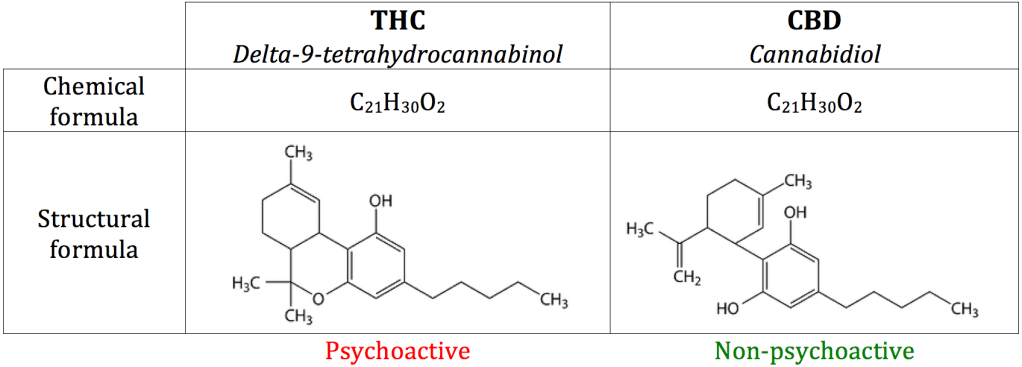
So… surely you have heard about the psychological effects that a cannabis user experiences? If so, it must have got you wondering, what is it about this natural crop that can manipulate one’s psychological awareness? Well, the compound responsible for this ‘euphoria’ is THC which acronyms for delta-9-tetrahydrocannabinol (if you can manage the mouthful). This compound is considered the main psychoactive chemical out of approximately 500 chemical compounds naturally found in marijuana. Recently, much more attention has evolved around a compound, which has the same chemical makeup as THC, yet its effect on the body is vastly different. This compound, known as Cannabidiol (CBD) is made up of 21 carbon, 30 hydrogen and 2 oxygen molecules, just like THC. The two are nearly identical twins if you like. What differentiates them from one another however is the arrangement of a single atom, and this is illustrated below:

Untitled111

To put things into perspective… an atom is approximately a million times smaller than a strand of your hair and so we’re talking about a microscopic difference! It is crazy to believe, but this minuscule difference is responsible for very different effects on our body.

The Endocannabinoid system and Cannabinoids

Before we dive further, it is important to understand how cannabinoids react with the body and the process they undergo.

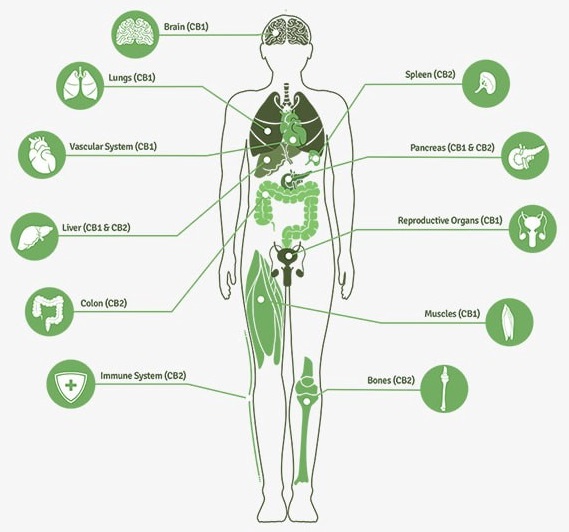
So, the cannabinoid compound interacts directly with the endocannabinoid system (ECS), which is basically a network of receptors (complementary binding sites to cannabinoids) spread across parts of the human body. Currently, two of these receptors have been identified throughout the body and classed as CB-1 and CB-2. The CB1 receptors are predominantly found in regions of the brain responsible for mental and psychological alterations whereas their CB-2 counterparts are distributed throughout the immune and central nervous system.

0_Wlut-mtfrAFbwClr

Now, the positioning of that atom between THC and CBD I mentioned earlier is what differentiates the effects that each of them has on the body. Both compounds bind to the CB-2 receptor similarly and hence impact the central nervous system similarly too. This reaction is what lead to an array of medical benefits associated with the two. The interaction with the CB-1 receptor, however, differs between THC and CBD. The molecular structure of THC allows for it to bind directly with this receptor, which in turn stimulates the release of chemicals responsible for “getting high”. In contrast, these stimulating chemicals are not released when CBD’s attempt to bind to the CB-1 receptor as their ability to bind in not as effective (Reggio, 2010). This is the main reason why CBD does not create psychoactive effects. Interestingly, CBD has also been found to hinder the bond between THC and CB-1 and thus neutralises the psychoactive effects caused by the THC.

THC and CBD content in medicinal marijuana

You should now have a sound idea on how and why the two differently affect individuals and through this, have realised that CBD’s are the components which are preferred in medicine.

CBD’s are mainly preferred as they offer more health benefits, do not cause psychoactive effects and currently are not illegal due to unclear laws around most of the world, unlike THC. So, for example, some states in the US have legalised the prescription of medical marijuana to patients in need. This means that they have allowed for the prescription of cannabis which is much more concentrated in CBD rather than THC. The concentration of these compounds in recreational marijuana differs, as THC tends to be much higher than CBD. So, in terms of medicinal use, the pharmaceutical producers want to omit the euphoria caused by THC by suppressing its presence in the herbal product.

Currently, CBD is therefore still in the grey area, but this is drastically changing with increasing studies and improving biotechnology for research and manufacturing. On this note, I will explore these biotechnologies in my next blog so stay tuned in… I’m sure you’ll find it interesting!

Cannabis – Class B drug or revolutionary medicine?

Cannabis plant


We live in a society where the current public and government perception of an array of controversial topics is decidedly offbeat. This disputable viewpoint, along with other factors, greatly contributes to the decisions made by influencers, and in some instances, prevents the use of valuable resources to their fullest potential. A strong example of this is Marijuana (commonly known as cannabis) and its application in society.

History & Law

For centuries, hemp, a strain of cannabis predominantly lower in tetra-hydro-cannabinol has been used in industry for fibres, oils and seeds. Recreational use of the drug has been practised for much longer than this, yet a majority of the world’s government put a ban on this form of misuse in the early 20th century. Since then, a majority of these countries still enforce this law, even though we have since developed a better understanding of the active components, and the psychological (Walsh et al., 2017) and biochemical (Hill et al., 2017) effects that can be achieved from them. More emphasis evolved around the negatives of the drug, and the enforcement if one was found cultivating, possessing and distributing Cannabis, and thereby placing less attention on the medicinal benefits.

In recent decades, use of the drug has become more acceptable worldwide. Countries such as the Netherlands have allowed for the recreational use of the drug whilst some American states have legalised the use of cannabis for medicinal purposes only. The UK, however, has remained very hesitant on legalising the use of the plant for neither, recreational nor medicinal. The class B classification of the drug has remained the same since it was added to the Dangerous Drugs Act 1920 in 1928 and remains there till today. There was a slight movement towards acceptance between 2004 and 2009 when the drug dropped to a class C but this didn’t remain for long due to political and public safety factors. These factors seemed to have outweighed the public opinion as according to BBC news more people were in favour of this down classification (49% supported this movement whilst 36% didn’t).

Medicinal or Recreational cannabis?

It is important for laws to be set with the differentiation of ‘recreational marijuana’ and ‘medical marijuana’ in mind as their expected effects vary. Particularly more so, when patients who currently benefit medically from the drug in the UK have to commit criminal offences to obtain any form of cannabis. This ‘street’ cannabis is what causes harm to long-term users, as its manufacture does not comply under any standard operating procedures approved by regulatory bodies like the MHRA/FDA. This means that’s compounds may be used which greatly influence previously identified psychological harm (Di Forti et al., 2009). Could this also reason to the negative stigma around the plant?

Anyway… the difference between recreational and medicinal marijuana is quite simply segregated by the proportions of two relevant components:

  • Tetrahydrocannabinol (THC): The psychoactive compound of the cannabis plant which produces the ‘euphoria’ or high.
  • Cannabidiol (CBD): The substance that does not produce the high, yet has been recently found to hold many medicinal benefits.

Recreational marijuana is the type that is usually found on the streets. It is usually much higher in the psychoactive compound THC whereas its medicinal counterpart contains far more CBD. Use of the medicinal product, whether smoked, vaped or consumed, does not create the euphoria, yet gives the user relief from certain disorders. Extensive cannabinoid research has found benefits including pain control, multiple sclerosis, insomnia and has also been found to lessen disease symptoms including tremors in Parkinson’s disease (Grinspoon, 2018).

Where we are now?

As medicine and its application in society have improved over time, scientists have further studied CBD and other compounds in cannabis. A company recognised well in the field is GW Pharmaceuticals, who earlier this year became the first to have their cannabinoid-derived product approved for commercialisation by the FDA. The product (Epidiolex®), compromised of purified cannabidiol was created to treat two rare forms of epilepsy, Lennox-Gastaut syndrome and Dravet syndrome (FDA, 2018). Other preliminary uses for this drug have also been identified, yet not been approved by the FDA. Regardless of this, it is evident through FDA approval, that cannabis products have medicinal benefits… It’s just important to use the correct compounds in the correct manner to achieve the desired effects.

GW Pharmaceuticals, along with similar businesses will continue to undergo extensive research using state-of-art biotechnology to create medication cannabinoid-derived medication. I will get into more depth on the main active compounds found in cannabis in my next blog and explain their effect on the body.