How bioengineering correlates to cannabis?

1481782328_62301

Medicine has evolved drastically, from our ancestors using natural remedies believed to have healing powers to now, the use of synthetic drugs, which target diseases far more effectively. It is believed that the next era of medicine will move away from management of genetic disorders, and towards the manipulation of genetics responsible for these diseases in the first place.

This is now more achievable than ever, as only a few years back, scientists discovered a genome editing technology that has revolutionised the possibilities of bioengineering. This system, known as clustered regularly interspaced short palindromic repeats, or simply as CRISPR, is derived from a bacterial defence mechanism against viral infections. Researchers found that they were able to manipulate the mechanisms to alter genetic sequences quite precisely in animal, plant and human DNA (if it is ethical that is).

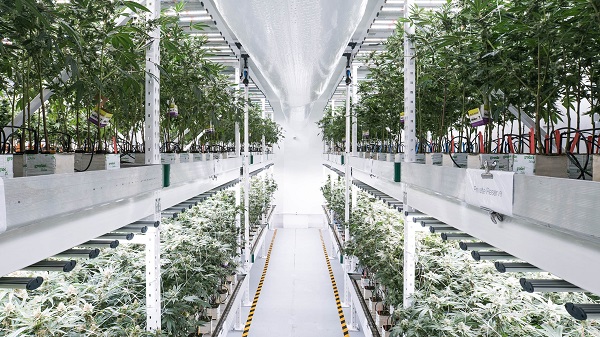
Botanical gene manipulation isn’t a new thing at all as we have for many years now engineered crops through selective breeding techniques. These were however ineffective due to factors including trial-and-error and therefore took a very long time to achieve desired traits. The CRISPR system is however far more effective in terms of time, cost, and the specific effects it causes in organisms, making it very appealing for private and government research. The cannabis industry, in particular, is actually aiming to utilise these technologies as they are constantly figuring out ways to maximise, optimise or alter components found in the plant.

Ryan Lee, CEO, and founder of Chimera Genetic Resource Management praised genetic engineering of cannabis, stating that it “could make the cannabis resistant to things like mould, powdery mildew, and pests without any of the regular horticultural interventions”. He also expanded on the ideology that “Through biotechnology, you could even change the chemical pathways in the plant”, making it possible to alter the level of active compounds that grew within the crop. This would significantly help streamline the extensive use of filtration and separation techniques currently used in the drug’s manufacture process. Even more so, appropriate bioengineering could drastically speed up the manufacture of compounds like Cannabigerol (CBG), which can conventionally take up to 10 years to grow. Lee also added that this process could be shortened to just a few months… Not only would this be a huge advancement in the world of natural pharmaceuticals, but it could vastly increase the availability of natural drugs (which can currently be very expensive to buy) to many more people worldwide.

So where are we now?

At this moment in time, genetically modified cannabis just doesn’t exist in the industry. Studies and research have shown modern engineering technology to desirably alter the plant’s properties, yet these have not yet been adapted into industrial practice. Maybe because there’s still a grand global stigma over genetically modified organisms? Maybe because genetic modification is relatively new and not much research has investigated cannabis modification? The bottom line is that we have the technology here, ready to use… we just need to utilise more funding within this field.
 

Biotechnological applications for extracting cannabinoid compounds


Previously in my blog, I explained how the biotechnological industry has adapted its expertise to cannabinoid research, development and application. I would like to now dive deeper into how biotechnological devices have shaped cannabinoids, as biotechnology does not just refer to an industry, but also the medical devices, techniques and processes used in pharmaceuticals. These applications are vital for effective research and down-stream production of many drugs now used in modern medicine.

Process of manufacture

In order to develop Epidolex®, a CBD purified drug; scientists have to separate out many compounds found in the plant until they are left with the desired product. This journey of filtration can become very difficult as biological compounds, including cannabinoids, rarely adapt to undesirable environments causing them to denature or become inactive, and hence medically useless most of the time. The processes have to, therefore, be very sensitive, and capable to work exactly inline with the compounds optimum condition including temperate, acidity and conductivity.

Initially, before the compounds can be extracted from the crop, the plant is processed into a liquid form. This can be done by simply ‘blending’ down the solid plant to create a mixture, which is much easier to work with. After achieving this ‘cannabis mixture’, it can be processed through different flirtation techniques, the main three being:

Centrifugation.
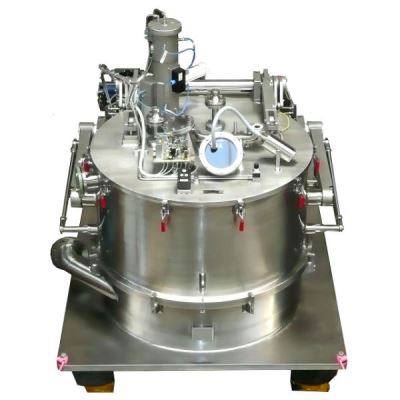
Centrifugation involves the separation of compounds based on their size, shape, density and viscosity by spinning down the solution at high speeds. This motion generates a centrifugal force, which causes heavier compounds to subside at the bottom of the centrifugal bowl, whilst smaller, less dense molecules remain on top in solution. This process referred to as preparative centrifugation, is very effective because it tends to remove a large majority of unwanted compounds from the mixture, leaving a less dense liquid solution containing proteins, biomolecules and other smaller compounds. In later processing stages, it can become more difficult to separate smaller compounds. Scientists are therefore able to apply a membrane into the centrifugal bowl, which is capable of capturing certain compounds, whilst other unwanted compounds of similar density pass through. Here, compounds may be separated due to affinity to a particular compound, which is added to the bulk prior to centrifugation.

Centrifuge
Centrifuge – Picture has not been created by the author but taken from an external source.

Chromatography.
Another separation technique abundantly used in downstream pharmaceutical production is chromatography, in particular, High-performance liquid chromatography (HPLC). The theory behind this process is that for example, the solution with the CBD and other bioproducts are mixed with a mobile phase solution, which is then run through a chromatography column that holds a stationary phase. The properties of the stationary phase differ as some will separate molecules depending on molecular mass (size-exclusion chromatography) whilst others on their molecular charges (ion-exchange chromatography). In theory, however, the desired compounds are held up within the stationary phase, whilst the mobile phase passes through the column into waste with some of the unwanted products. At times, unwanted bio-compounds may be bound to the desired compound (CBD) and therefore buffers are run through the column, to slowly remove these unwanted. Lastly, to remove the desired compound from the stationary phase, an elution buffer is run through and what leaves the column is collected as it contains the CBD.

Bioproduct production firms tend to use a Mass-spectroscopy (MS) meter to measure the properties (usually conductivity) of the column outlet to help determine the composition of the existing solution. This combination of MS and chromatography is very desirable in downstream production due to the high specificity it produces, compared to other chromatographic detectors.

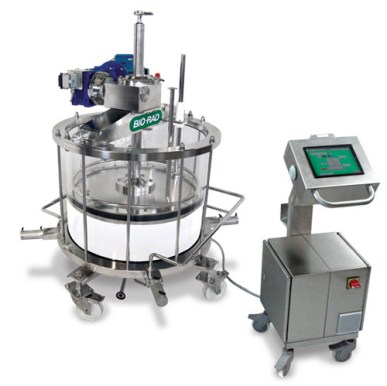
chromotography
Chromatography column with Mass Spec – Picture has not been created by the author but taken from an external source.

Filtration and ultra-filtration.
The simplest of these techniques is filtration which involves passing the liquid through a membrane-bound filter. In theory, the solution passes through a membrane, leaving any undesired compounds behind. Ultra-filtration works in the same manner but uses hydrostatic pressure to remove much finer particles from the solution. This device is abundantly used in pharmaceutical production at end stages of product filtration as it removes very small particles, including suspended bacteria, viruses and salts. This helps to ensure the CBD product produced does not hold contaminants that can make the drug harmful.

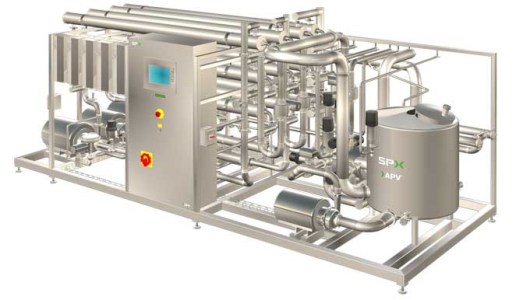
Ultra-filtration
Ultra-filtration – Picture has not been created by the author but taken from an external source.

So now, (as long as I haven’t lost you) you should have an idea of how biotechnological instruments have been applied to the manufacture of purified CBD. I have only mentioned some of the most commonly used devices, yet there is many more involved in pharmaceutical production. Without them, scientists would struggle to derive molecular compounds so efficiently… it would really be like finding a needle in a haystack… actually, that’s an understatement of the complexity. So regardless of the efforts to develop this process, and therefore Epidolex®, GW Pharmaceuticals struggled for years to gain FDA approval. My next blog will look into the process that Epidolex® had to overcome in order to finally gain this ‘medicinal’ recognition.